
When customers order an EVPAD TV box, one question matters just as much as the product specifications: what happens before the box is shipped? A careful pre-shipment process helps reduce avoidable mistakes, confirms that the correct model and main accessories are prepared, and gives buyers a clearer picture of how the order is handled before delivery.
This guide focuses on the practical steps we can show directly: product verification, packing preparation, first-boot confirmation, HDMI display output, and final shipment readiness. We do not use exaggerated claims such as fixed test times or 100% pass rates without supporting records.
1. Product Verification Before Packing
Before the shipping carton is sealed, the first step is to confirm that the correct product has been prepared. For an EVPAD 12P order, this means checking the retail box, device, remote control, and the main accessories that should be included with the shipment.
The basic verification points include:
- Confirming the EVPAD model on the retail package
- Checking the device for obvious exterior damage
- Confirming that the remote control is present
- Checking the main accessories prepared for the order
- Confirming the correct plug option for the destination when applicable
These are simple checks, but they help prevent common fulfillment mistakes before the order enters the final packing stage. Buyers who want to review the current hardware and configuration can also check the EVPAD 12P product page.
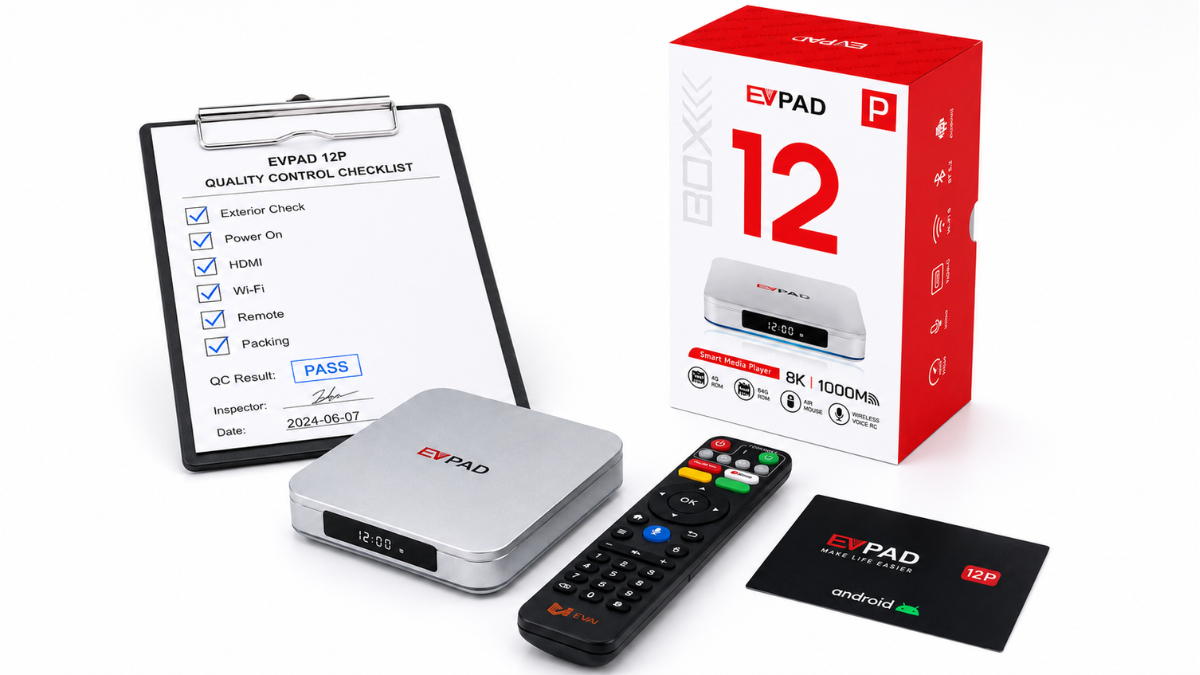
The checklist image above is an illustration of typical inspection items. It is not presented as the original QC record for a specific unit.
2. Packing Preparation and Accessory Check
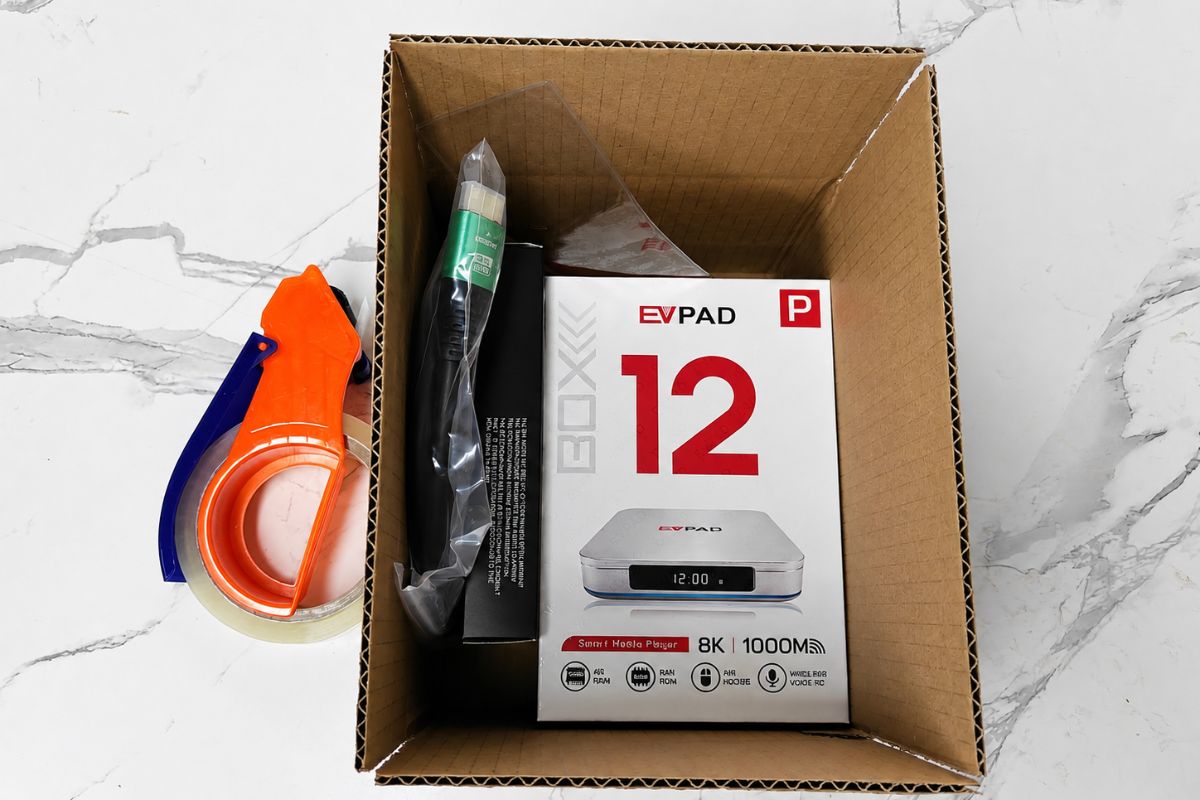
After the correct EVPAD unit is identified, the order moves into packing preparation. The real photo below shows an EVPAD 12P retail box and accessories being prepared inside an outer shipping carton.
At this stage, the practical goal is to make sure the order is complete and ready for transport. The team can confirm that:
- The correct EVPAD retail box is inside the shipping carton
- The main accessories are prepared with the order
- The outer carton is in suitable condition for sealing
- The product is positioned securely enough for the next packing step
- The model and visible accessories are checked again before final sealing
The exact packing method may vary depending on the order, warehouse, destination, and available packing materials. The purpose of the photo is to show a real packing stage, not to claim that every shipment uses an identical carton layout.
3. First-Boot and HDMI Display Confirmation
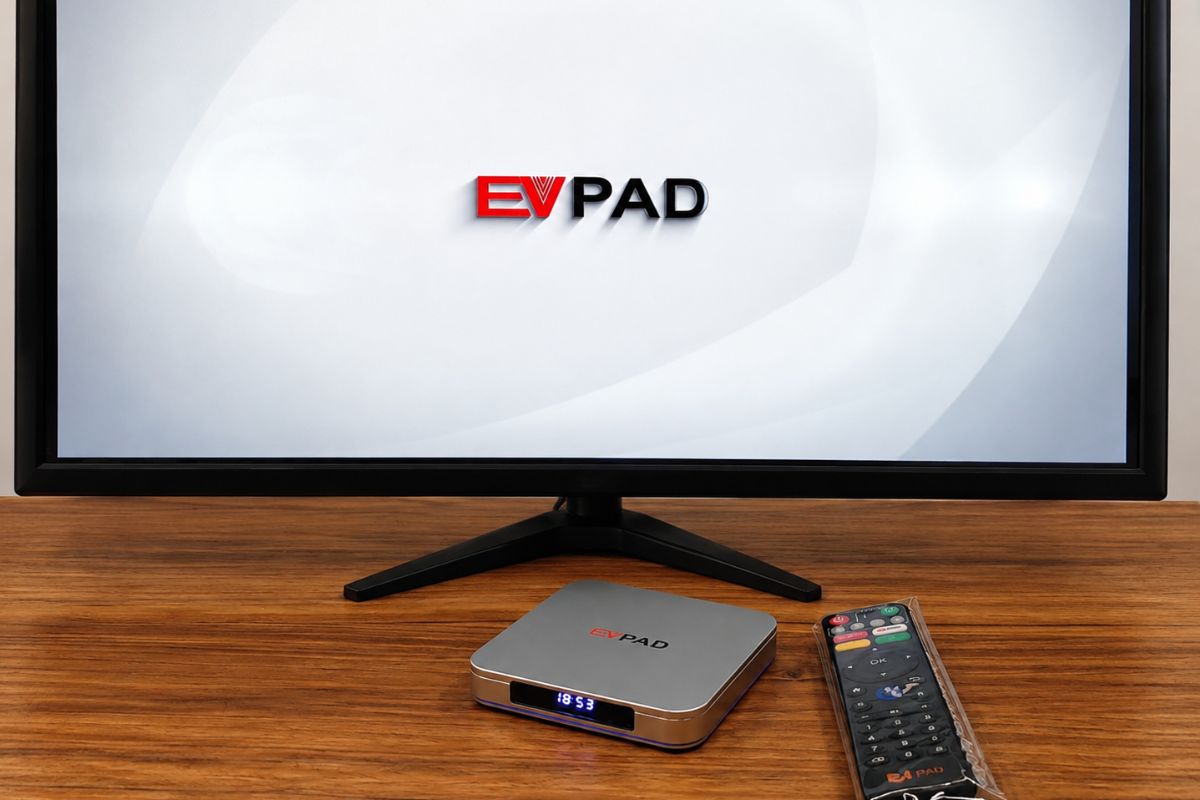
One of the most useful checks before shipment is confirming that the device can power on and produce a visible image. In the real first-boot photo below, the EVPAD device is connected to a display, the front panel is active, and the EVPAD startup logo is visible on screen.
This provides direct evidence that the tested unit:
- Receives power normally
- Shows a response on the front display
- Outputs a visible image through HDMI
- Enters the normal startup sequence
This is an important distinction. A device that simply receives power is not enough for normal TV-box use; the unit also needs to send a usable video signal to a television or monitor.
4. Remote Control and Final Order Readiness
The first-boot photo also shows the remote control beside the EVPAD device. The remote is one of the main components customers need for normal day-to-day operation, so confirming that it is present before final packing is an important part of order readiness.
Without a separate button-by-button test record, we do not describe the photo as proof that every remote function was individually tested. A more accurate description is that the remote and device are prepared together, and basic operational checks can be completed according to the actual warehouse process before the order is sealed.
Before dispatch, the final preparation stage should focus on the essentials: correct model, main accessories, correct power option, complete packing, and a shipment that is ready to be handed over to the carrier.
5. Why These Pre-Shipment Checks Matter
A useful quality-control process does not need exaggerated language. The value comes from reducing simple, preventable problems before the package leaves the warehouse.
The main objectives are:
- Correct product: verify that the model matches the order
- Accessory readiness: confirm that the main components are prepared
- Normal startup: verify that the tested unit powers on
- HDMI output: confirm that a visible startup image reaches the display
- Packing readiness: prepare the order securely for dispatch
These checks do not guarantee that no issue can ever occur during transportation or later use, and they do not replace after-sales support. They are simply practical steps that help improve order accuracy and give customers more confidence in how the product is prepared.
6. What We Do Not Claim Without Records
For a behind-the-scenes article like this, accuracy matters more than impressive-sounding numbers. Unless there is a corresponding test record, we avoid claims such as:
- Every unit is tested for a fixed number of minutes
- Every function on every unit receives a full stress test
- A specific pass rate or failure rate
- Exact Wi-Fi or Ethernet speeds for each unit
- Exact startup times for every device
- Invented QC numbers, inspector names, serial records, or timestamps
Using real packing and startup photos is more valuable than adding statistics that cannot be verified.
7. After the Order Ships
Once the order has completed its packing process and is handed over for delivery, the next steps are shipment tracking and after-sales support. If you have a question about an order, delivery, setup, warranty, or a product issue, you can use our Contact Us page to reach the support team.
For customers who want to learn more about the store, current EVPAD models, shipping information, and support resources, you can also return to the EVPAD store homepage.
Final Thoughts
A good pre-shipment process is not about making the inspection sound more complicated than it really is. It is about checking the right product, preparing the main accessories, confirming that the tested device can power on and display an HDMI image, and making sure the order is properly prepared before dispatch.
The real packing and first-boot photos in this article provide a practical look at that process. As more dated checklists and operational records become available, this page can continue to be updated with additional first-party evidence.